



The World Cup Is Here, Toronto — The Planning Was Messy, But the Moment Is Ours
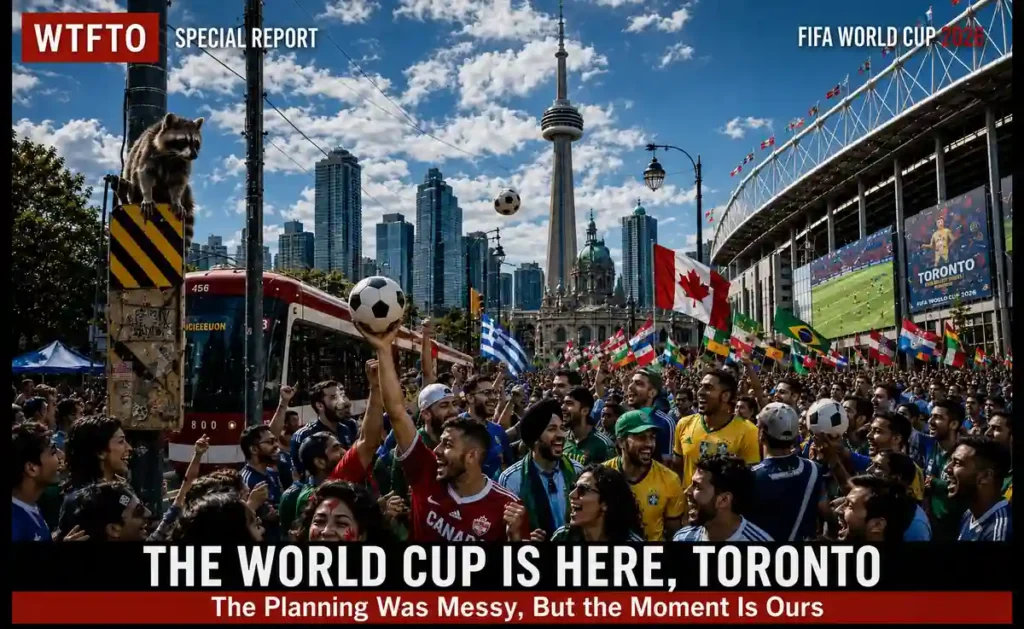
On Friday afternoon, Toronto becomes a World Cup city for real. Not in a press release. Not in a tourism slogan. For real — with Canada walking onto the field at Toronto Stadium against Bosnia and Herzegovina, the flags coming out, the streets around Exhibition Place tightening up, and the world’s biggest sporting machine finally landing in a city that has been talking about being “world class” for decades. Toronto’s World Cup schedule starts here, with Canada’s opening match on June 12 at 3 p.m. Now the world is actually showing up. The question is whether Toronto is ready to meet the moment — or whether we’re about to do what we so often do: spend big, over-complicate everything, and somehow make regular people feel like spectators to their own city.
For anyone who does not follow soccer, the FIFA World Cup is not just another tournament. It is the tournament — the one where countries stop working, families suddenly remember their grandparents’ birthplace, flags appear on car windows, and people who have not watched a full match in four years become experts on midfield formation by breakfast. This year, the World Cup is being hosted across Canada, the United States, and Mexico, which means Toronto is not just watching the party from the couch anymore. We are on the guest list. Whether we dressed properly for the occasion is still up for debate.
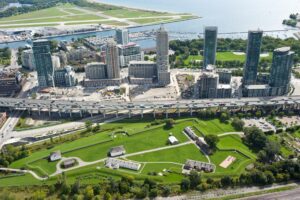
Toronto gets six matches, one official fan festival, a temporarily expanded stadium, a pile of visitors, and the civic joy of everyone suddenly pretending they always understood offside. The games will be played at Toronto Stadium — the World Cup name for BMO Field — while the city’s official FIFA Fan Festival runs at Fort York and The Bentway. On paper, it is everything Toronto likes to say it is: global, diverse, loud, proud, full of food, flags, music, languages, and people arguing passionately about countries they may or may not have visited. In other words, a regular summer weekend in Toronto — except this time FIFA found a way to put a logo on it.
Of course, because this is Toronto, the magic comes with a receipt long enough to qualify as public infrastructure. Hosting six World Cup matches is now budgeted at about $380 million, with the City responsible for roughly $179 million of that cost after federal and provincial contributions. Across Canada, public support for the tournament is estimated at more than $1 billion, or about $82 million per Canadian match. So yes, this is a historic sporting moment. It is also a very expensive civic group project — the kind where everyone gets invited, everyone pays, and somehow FIFA still gets to hold the clipboard.
Of course, because this is Toronto, the magic comes with a receipt long enough to qualify as public infrastructure. Hosting six World Cup matches is now budgeted at about $380 million, with the City responsible for roughly $179 million of that cost after federal and provincial contributions. Across Canada, public support for the tournament is estimated at more than $1 billion, or about $82 million per Canadian match. To be fair, this is not only a FIFA thing. The Super Bowl, the NBA, the Olympics, and every other mega-event usually show up with their own binder of demands, sponsor rules, security plans, hotel needs, and promises of economic glory. FIFA just happens to be doing it on a global scale, with a clipboard so big it probably needs its own security detail.
And no, Toronto does not get to act like this fell out of the sky wearing a FIFA blazer. This city has chased mega-event glory before. We have talked Olympics. We watched Vancouver go through its own Olympic hangover. We have seen how these things work: the bid sounds exciting, the early number sounds manageable, the politicians smile for the cameras, and then the real costs start arriving like uninvited cousins at a wedding. Yes, there was a mayoral change. Yes, Olivia Chow inherited a deal that started before her. But inheriting the mess is not the same as being excused from cleaning it up. If the previous council failed to ask enough hard questions, the current one still had a duty to keep asking them. Instead, taxpayers are still left trying to understand exactly what they are paying for, why it costs this much, and why the city can produce slogans faster than it can produce a plain-English receipt.
And then there is the part that should bother Toronto more than it seems to: who actually gets inside? The World Cup is supposed to be the people’s game, the sport of parks, schoolyards, basement televisions, garage flags, crowded bars, and families yelling at a screen like the referee can hear them from Dufferin Street. But in Toronto, many regular fans are looking at ticket prices and realizing the world’s game has been dressed up like a luxury product. The city even used its host-city privileges to buy more than 3,500 tickets and resell them to corporate sponsors and partners at a profit, saying the money would help offset hosting costs. Maybe that is practical. Maybe it is clever. But it is also the kind of thing that makes people ask a very simple question: if taxpayers helped build the stage, why do so many of them feel like they are being pointed toward the sidewalk with a “good luck at the fan zone” smile?
The Fan Festival helps, and it should be fun. Fort York and The Bentway are getting the official treatment: big screens, music, food, culture, and enough branded signage to make a raccoon consider a sponsorship deal. But even there, Toronto somehow found a way to trip over the welcome mat. The city originally moved toward a $10 general admission fee for the fenced-in celebration, then backed off after public and political backlash — because apparently charging people to enter the “public” party they were already helping pay for did not land as beautifully as expected.
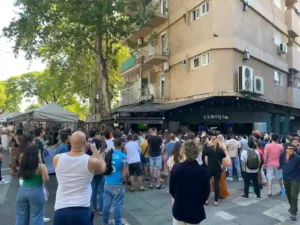
And speaking as the author, this is where Toronto’s missed opportunity feels personal. During the last men’s World Cup in 2022, Argentina was not even the host country, but in Buenos Aires the city still knew how to make the tournament feel alive. Parks had screens. People gathered. Bars and restaurants leaned into it. Families, flags, food, noise, strangers becoming friends for 90 minutes — the whole city seemed to understand that the World Cup is not just something you watch, it is something you let people live.
Toronto should understand that better than almost anywhere. This city is not simply hosting the World Cup audience — in many ways, Toronto is the World Cup audience. We are home to communities from all over the planet, with more than 180 languages available through city services and one of the most diverse populations in the world. When Ghana plays, Toronto has Ghanaian fans. When Croatia plays, Toronto has Croatian fans. When Germany, Senegal, Panama, Iraq, Côte d’Ivoire, Bosnia and Herzegovina, and Canada play, Toronto has people ready to live every one of those matches like it belongs to them — because in this city, it does.

Toronto already has designated parks where adults 19 and over are allowed to bring and drink their own alcohol, while formal events can still be handled through proper permits. So why were neighbourhood parks not better used as local World Cup gathering spaces? Why not Christie Pits, Dufferin Grove, Earlscourt, Trinity Bellwoods, Cedarvale, or other approved parks with big screens, food, families, flags, and the kind of messy joy Toronto is actually good at when City Hall does not overthink it into a permit application with a logo? At least from where I’m sitting, if you are not at the stadium or inside the official fenced-in event, Toronto does not exactly feel like a world event is about to arrive. The official version still feels a little too controlled, a little too centralized, and a little too Toronto: world-class multiculturalism, neatly arranged behind a gate with a barcode.
And even if you do not care about soccer, soccer is about to care about you. Toronto’s World Cup mobility plan makes it clear that match days will not be business as usual around Exhibition Place, Liberty Village, Fort York, and the waterfront. Roads will close, parking will disappear, vehicle access will be restricted, and public transit will become less of a suggestion and more of a survival strategy. To be fair, the TTC and Metrolinx are adding service, and the City has put road work restrictions in place from May to July. Good. That should happen. But again, this is Toronto, so even the preparation somehow feels like it arrived wearing one shoe. TTC service changes were still being announced days before kickoff, residents are still trying to figure out what will actually happen street by street, and the city that has hosted Pan Am Games, chased Olympic dreams, survived endless construction seasons, and watched every other mega-event circus roll through North America still seems surprised that traffic, transit, permits, policing, sports schedules, festivals, deliveries, and human beings might all need to be coordinated at the same time. For a few weeks, Toronto will be doing what Toronto does every summer anyway — construction, traffic, detours, confusion, and people yelling at streetcars — except now we get to call it international event management.
To be clear, none of this means the World Cup is bad for Toronto. It should bring visitors, spending, hotel bookings, restaurant traffic, bar crowds, extra shifts for workers, and a rare chance for the city to feel like it is hosting the world instead of just hosting another emergency meeting about traffic cones. The City has pointed to major economic benefits, including hundreds of millions in projected activity. Great. Let the hotels fill. Let the restaurants make money. Let the bars overflow. Let the cab drivers, servers, cleaners, cooks, security guards, street vendors, small businesses, and neighbourhood spots all get a piece of the action. But an economic-impact number is not the same thing as a public receipt. It does not tell us who actually benefits, who gets left out, what comes back to the city, or whether the people helping pay for the event get anything more than traffic, fencing, and a nice poster telling them to take transit.
And here is the thing: Toronto can still make this work. The World Cup has not even fully arrived yet, and the city still has time to loosen up, open the doors a little wider, and stop treating joy like a liability issue. Put more screens where people already gather. Help neighbourhoods celebrate safely. Promote local bars, cafés, restaurants, and community spaces. Make it easy for families to find free places to watch. Give residents clear information before they are standing beside a closed road wondering if they accidentally entered a diplomatic motorcade. Toronto does not need to turn into Rio overnight. Nobody is asking City Hall to suddenly develop rhythm. But for once, it would be nice if the city acted less like the World Cup is a problem to manage and more like it is a once-in-a-generation chance to let Toronto be Toronto — loud, diverse, messy, emotional, over-caffeinated, and occasionally fun on purpose.
Because once the whistle blows Friday, the politics will still matter, the receipts will still matter, and the planning questions will not magically disappear just because somebody painted a maple leaf on a scarf. The traffic will be real. The road closures will be real. The chaos will be real. And yes, Toronto has managed to turn even a world-class celebration into something that comes with warnings, fences, delays, and probably three people in safety vests pointing in different directions.
But speaking as the author, I am still going out there. I am not going to sit at home and complain that it will be too busy, too crowded, too loud, too confusing, or too Toronto. This is history. This is a world event landing in our city, in a place where so many of the world’s cultures already live, work, argue, cheer, eat, dance, and celebrate. I want to walk through it. I want to feel the energy. I want to see the flags, the families, the fans, the bars, the streets, the noise, and the city trying — maybe awkwardly, maybe imperfectly — to enjoy itself. The frustration is not that the World Cup is here. The frustration is that Toronto should have made it easier for more people to feel like it was theirs.
0 Comments
be respectfulNo comments yet. Start the discussion.