



The Store at the End of the Block
How Toronto’s corner grocers disappeared — and what the city lost when the windows started closing. Toronto did not just lose corner…
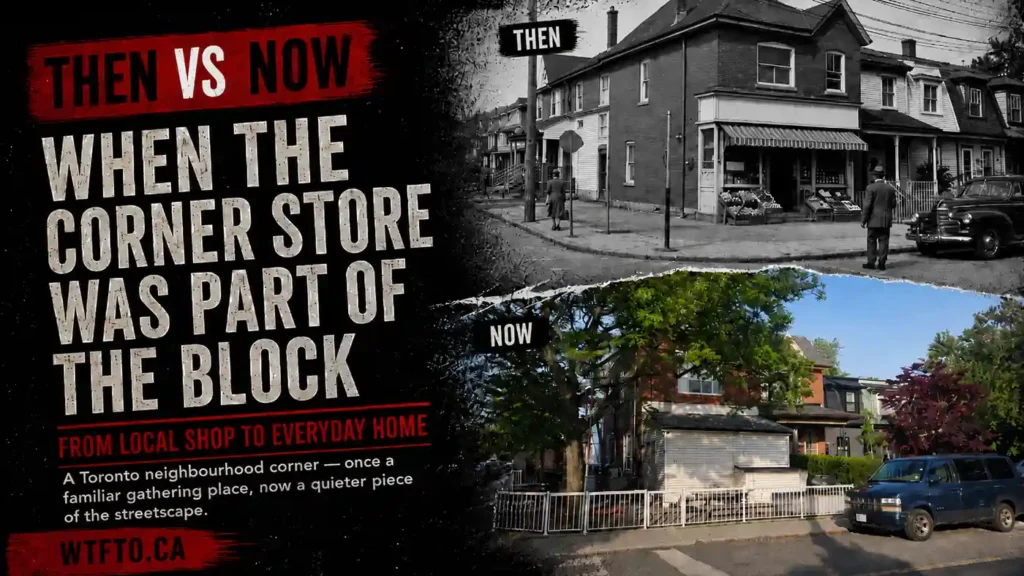
How Toronto’s corner grocers disappeared — and what the city lost when the windows started closing.
Toronto did not just lose corner stores. It lost small public rooms where the street knew itself — places where daily life happened close to home, without an app, a car, or a trip to a plaza.
Then: The Corner-Store City
For a lot of Toronto people over a certain age, the corner store was not just a place you went. It was the place at the end of the block where the bell rang when you walked in, where the owner knew your mother, your father, your brother, your dog, and probably what you were supposed to be buying before you said it out loud.
It was where kids bought five-cent candy, parents grabbed milk on the way home, seniors picked up the paper, and somebody always seemed to know who moved in, who moved out, who was sick, who got married, and who was “up to something.”
Every neighbourhood had one. Sometimes two. Sometimes one on every other corner.
They were grocery stores, variety stores, candy counters, smoke shops, unofficial message boards, and tiny neighbourhood confession booths. They were where people bumped into each other without planning it. Where the street had a memory. Where your block felt less like real estate and more like a village.
Then, slowly, they disappeared.
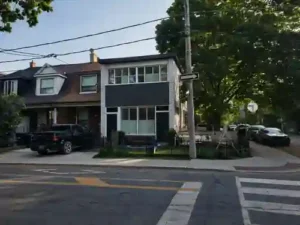
The signs came down. The windows were covered over. The old shop doors became front doors. The candy counters vanished. The handwritten hours were gone. What used to be a place where half the block passed through in a day became another private house, another sealed-up storefront, another reminder of a Toronto that used to live closer to the sidewalk.
This story is not just about corner stores closing. It is about what Toronto lost when the little stores disappeared from the corners.
You did not need an app, a car, a delivery fee, or a trip to a supermarket. You walked to the corner. You sent your kid with a few coins. You picked up milk, bread, the paper, a chocolate bar, maybe a can of something forgotten for dinner. The store was close enough that you could go in slippers, close enough that somebody might see you, and familiar enough that it barely felt like shopping.
The person behind the counter was not a “retailer.” They were part of the street.
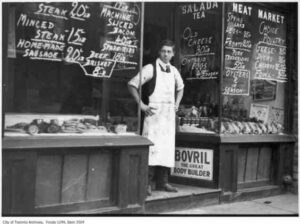
They knew who paid on Friday, which kid was supposed to bring home milk and not spend the change on candy, which old man came in every morning for the paper, and which families were going through a hard time. Sometimes they extended credit. Sometimes they gave advice. Sometimes they just listened. And sometimes, of course, they knew everybody’s business before everybody else did.
That was part of the deal.
The corner store was Toronto before Toronto became anonymous. It was the neighbourhood’s front desk, gossip counter, emergency pantry, candy shop, message board, and quiet little social club — all squeezed into one narrow storefront at the end of the block.
The Shift: When Toronto Started Separating Homes From Stores
By the 1950s and 1960s, Toronto was changing in a way that looked modern at the time.
The city was becoming more planned, more car-oriented, and more divided. Homes belonged on residential streets. Shopping belonged on main streets, in plazas, or in bigger commercial strips. The old corner store — sitting quietly inside a neighbourhood block, with a family living above it or behind it — started to look like something from an older Toronto.
On paper, the new idea sounded orderly. Separate the houses from the stores. Keep traffic and customers away from quiet streets. Push business toward bigger roads. Make neighbourhoods cleaner, calmer, and more predictable.
But something was lost in that neatness.
The little store on the corner was not just a business interrupting a residential street. It was part of how the street worked. It meant a child could run out for milk. It meant an older neighbour did not have to go far for bread. It meant people crossed paths without planning to. It meant the street had one small public room where the neighbourhood could still recognize itself.
Toronto City Planning later put numbers to that decline. Its 2022 Neighbourhood Retail and Services report traced the restrictive zoning approach in the former City of Toronto back to the 1959 by-law framework and noted that retail and service establishments in Neighbourhoods dropped from 2,137 in 1989 to 1,406 in 2019 — a 34 per cent decline.
That is how the corner-store city began to fade.
Not all at once. Not with a headline. Not with one big decision. It happened quietly, one counter at a time.
The Disappearance: When the Windows Started Closing
By the 1980s and 1990s, the old corner-store Toronto was already starting to vanish.
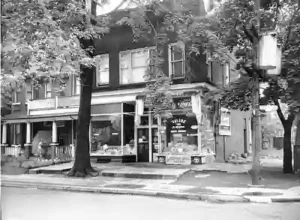
Families were shopping differently. Supermarkets were bigger. Cars made it easier to buy a week’s worth of groceries in one trip. Chain stores and plazas pulled people away from the little shops tucked into residential streets. More people worked farther from home. More households had less time for the old daily routine of walking to the corner for bread, milk, the paper, or something forgotten for dinner.
And the people who ran those stores were getting older too.
Many of them had spent their lives behind those counters. They opened early, closed late, knew every regular, watched kids grow up, and carried the quiet weight of the block’s daily needs. But when it came time to retire, there was not always another son, daughter, buyer, or new shopkeeper ready to take over. The neighbourhood had changed. The business had changed. The numbers had changed.
So the stores closed.
The signs came down first. Then the coolers disappeared. Then the shelves. Then the candy counter. The big front window that once showed bread racks, pop bottles, newspaper stacks, hand-written prices, and a view of the person behind the counter slowly became a curtain, a wall, or a renovation.
What had once been a small public room became private space again.
On some streets, you can still see the evidence if you know what to look for: a corner house with a storefront shape, a bricked-in window, a door that does not quite match the rest of the building, a flat front where a shop sign used to hang. Toronto is full of these ghosts. They are not ruins. They are houses now. Apartments. Cafés. Offices. Sometimes nothing obvious at all.
But for people who remember them, those buildings still carry a different map of the neighbourhood.
By the 2000s, many of those stores had disappeared so completely that younger residents could walk past the same corners every day and never know there had once been a little shop there at all.
That may be the quietest part of the loss.
Toronto did not just lose the stores. It lost the memory of how close daily life used to be.
Now: Toronto Rediscovers the Corner Store
After decades of watching those little neighbourhood stores disappear, Toronto has started circling back to an old idea: daily life works better when small shops and services are allowed closer to where people live.
By 2025, that shift was no longer just a conversation. The City’s Neighbourhood Retail & Services page says Council adopted zoning changes for major streets, home occupations city-wide, and neighbourhood interiors in select wards. A later public notice of passing describes the changes as permitting certain small-scale retail, service and office uses on select major streets, allowing small retail stores and limited eating establishments on certain interior neighbourhood sites in Toronto and East York, and updating home occupation permissions across the city.
This is the irony.
Toronto spent years treating residential neighbourhoods as places where houses should be separated from shops. But in the 2020s, the city began moving in the other direction, talking again about small local retail and service uses as something worth supporting — not everywhere, and not exactly as it once was, but in some form.
The old model is not returning in a pure way. The city is not suddenly rolling the clock back to family-run grocers, candy counters, and paper stands on every other corner. The new version is more likely to be a small café, a convenience store, a barber, a bakery, a little food shop, a neighbourhood service, or a home-based business fitted carefully into the rules around residential streets.
Still, the change matters.
It is an admission, even if nobody says it quite that way, that the old corner-store neighbourhood had something right. It understood that a city works better when daily life does not always require a long trip, a car, a plaza, or a main street. It understood that people need places close by — not just to buy things, but to feel that a neighbourhood is still alive.
Planning language now talks about walkable communities, complete neighbourhoods, and daily needs within walking distance. That may sound modern, but the truth is older than the language. Toronto once had that already.
It had it on streets where a kid could be sent out with change for milk. It had it on corners where neighbours crossed paths without arranging it. It had it in small stores where the person behind the counter knew your name, your family, and probably what you came in for before you asked.
What the city is rediscovering is not a trend. It is the value of something Toronto used to understand by instinct: that neighbourhood life works better when a block is allowed to have a little bit of life on the corner.
What Toronto Lost
What Toronto lost was not just a place to buy milk.
It lost a small piece of neighbourhood life that is hard to replace once it is gone.
The corner store gave a block a centre. Not a big one. Not a fancy one. Just a door that opened onto the street, a counter, a few shelves, a cooler, a candy display, and somebody who knew the rhythm of the neighbourhood. It was one of the few places where people could still run into each other without planning it, without booking it, without driving to it, and without needing a reason bigger than needing bread.
That mattered more than people realized at the time.
A corner store made a neighbourhood feel watched over in the old sense of the word — not monitored, not controlled, but noticed. The owner knew which kids belonged to which families. They knew who came in every morning. They knew when someone had not been around for a few days. They knew who was struggling, who was lonely, who needed a little extra time to pay, and who just wanted someone to talk to for five minutes.
There was gossip, of course. There was always gossip.
But even the gossip meant something. It meant people were paying attention. It meant the street had a pulse. It meant your life, in some small way, was connected to the lives around you.
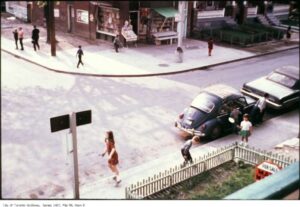
The old corner store did.
That is why the loss still feels personal to people who remember it. They are not just remembering a shop. They are remembering a version of Toronto where daily life happened closer to home, where neighbours crossed paths more often, and where a residential street could still have one small public room holding it together.
Today, many of those rooms are gone. Their windows have been bricked over. Their signs have vanished. Their counters are long removed. Younger residents pass them without knowing what they used to be.
But the memory is still there, tucked into the shape of the buildings and the stories people tell.
Toronto did not just lose corner stores. It lost the places where the neighbourhood recognized itself.
Well written story, and everything you mentioned is true. My family had 3 variety stories in different locations, at different times throughout my youth. We actually did live above the store in my childhood years. My siblings and I all worked there, and we did know everyone , and whose kids were who. We Knew everything that was happening in the neighborhood. I remember my parents had so many chit’s and notes on who owed what, under the change holder in the cash register. There were times when we couldn’t close the till, we would have a separate spot for them. Come payday they would come in and pay them , and start again, till their next pay cheques came. They would usually buy the same things week in week out. Milk, bread, eggs, Mac & cheese, cigarettes, a chocolate bar and some canned goods. Everyone was friendly and we enjoyed watching families grow and hearing of all the things going on in their lives. It was the real meaning of community. Sad, as cliche as it sounds, those were the good old days.
Thank you for sharing that. You remember it from the inside, and that makes it even more meaningful. I only remember those stores as a customer and neighbour, but even from that side, you could feel they were more than stores
So true and sad . Corner stores were a part of my youth 50 years ago and hold so many memories.